You’ve decided on grinding instead of digging the whole stump out, and now you’re wondering what that actually leaves behind once the machine is done. Is it just the visible stump that disappears, or does something stay buried down there that could cause problems later? How deep is stump grinding Pelzer SC crews typically go, and what happens to the roots, are two of the most common questions homeowners ask before scheduling the job. Call 864-232-8194 if you want a straight answer for your specific stump.
How Deep Is Stump Grinding, and What Stays Behind
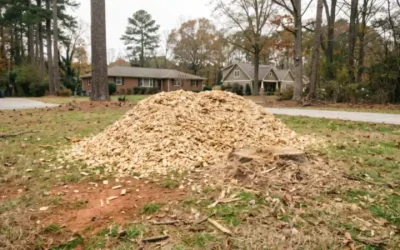
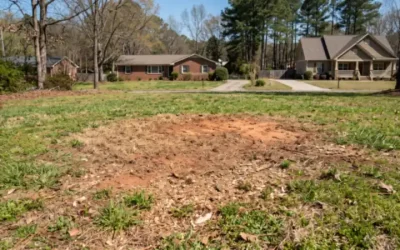
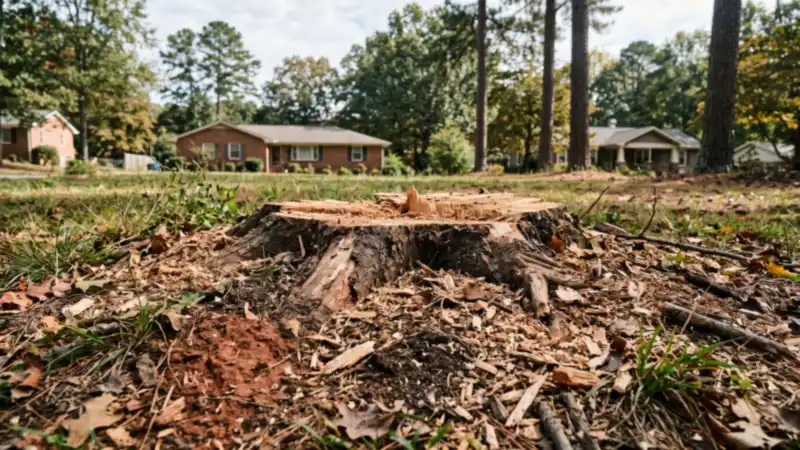
A standard stump grinding job typically takes the stump down four to six inches below the surrounding soil line, which is enough to let grass grow over the area and mow without hitting anything. That depth handles the visible stump completely, but it doesn’t remove the roots extending outward and downward from where the trunk used to be.
Those roots stay in the ground and gradually decompose over the following years, breaking down naturally the same way any buried wood does. For most yards, that’s not a problem. Decomposing roots a foot or more underground don’t interfere with grass, light landscaping, or everyday use of the space, and the process simply happens quietly out of sight.
Larger, older trees present a different situation. Their root systems often spread much farther than the stump itself, sometimes extending well beyond where anyone would expect based on the trunk’s size. Grinding addresses what’s directly beneath and immediately around the stump, but it doesn’t reach a root that’s traveled fifteen or twenty feet away toward a different part of the yard.
How deep is stump grinding able to go beyond that standard range is really a question of equipment and time rather than a fixed limit. A deeper grind is possible when a project calls for it, but it takes longer and generates more debris, which is part of why it’s treated as an upgrade from the standard depth rather than the default for every job.
When Depth and Remaining Roots Actually Matter
For most situations, a standard grind and the roots left behind afterward cause no real problems. A few specific plans change that calculation, though, and it’s worth knowing which ones before deciding between grinding and full removal.
- Planting a new tree or shrub in the exact same spot works better with less interference from old roots, so a deeper grind or even full removal may be worth the extra step
- Installing a patio, shed foundation, or anything requiring stable, compacted ground needs more than a standard grind, since remaining roots can shift or settle unevenly under a structure
- A stump near a septic line, irrigation system, or other buried utility sometimes calls for a deeper grind to avoid future root interference as decomposition occurs
- Simple lawn restoration or general yard use rarely requires anything beyond the standard depth, since decomposing roots well below the surface don’t affect grass or typical foot traffic
- A particularly large, mature tree’s root system may extend far enough that even a deeper grind only addresses part of it, making full removal the more complete option for ambitious landscaping plans
Matching the depth to the actual plan for the space avoids both overpaying for a deeper grind you didn’t need and underestimating what a bigger project will actually require from the ground beneath it.
Timeline is worth factoring in too. Roots left behind after a standard grind take years to fully decompose, not months, so any plan that depends on the ground being completely root free in the short term should lean toward full removal rather than waiting on nature to finish the job.
Why Franklin Tree Service Asks About Your Plans Before Choosing a Depth
Deciding how deep to grind a stump depends on what you intend to do with the space afterward, not a one size fits all default applied to every job. Franklin Tree Service asks about your plans for the area, whether that’s simple lawn restoration or something more involved, before settling on the right approach for your specific stump.
That conversation matters because a standard grind covers most situations perfectly well, and pushing for unnecessary depth just adds cost without adding benefit. At the same time, a homeowner planning to build something in that exact spot deserves to know upfront if grinding alone won’t fully solve the problem.
Properties across Pelzer and the surrounding area have stumps left from trees of very different ages and sizes, and the right depth for a young ornamental tree’s stump looks nothing like what a decades old oak stump requires. That variety is exactly why the plan gets built around the specific stump rather than a blanket standard.
Get the Right Depth for What You’re Planning
Knowing how deep your stump grinding needs to go, and what that means for the roots left behind, helps you plan the rest of your project with confidence instead of guessing. The right depth depends on your plans, not a fixed number that applies to every yard.
The stump grinding team at Franklin Tree Service can talk through what depth makes sense for your plans, with the full stump removal crew ready to step in if your project needs the roots completely cleared. Call 864-232-8194 and get an answer built around your specific stump.