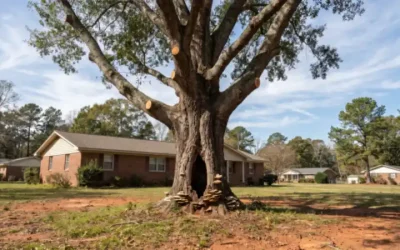
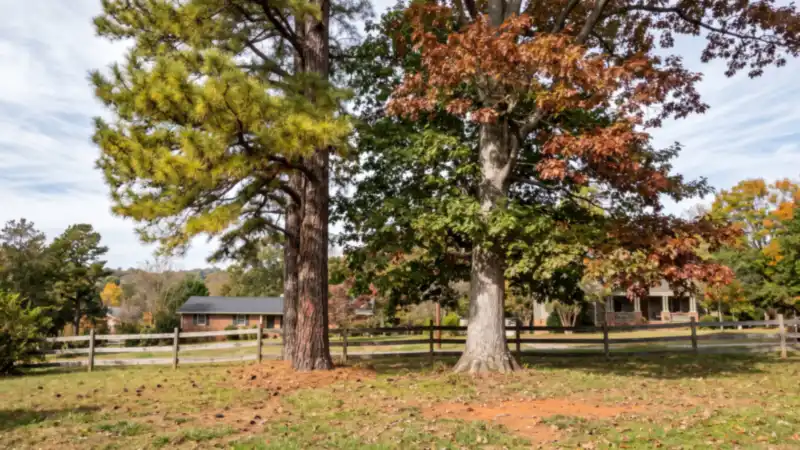
You trimmed the oak last February and it came back thicker than ever. You tried the same timing on the pine out front and it never quite looked right afterward. That’s not bad luck. Pines and hardwoods respond to pruning on different schedules, and getting tree pruning timing Pelzer SC homeowners rely on wrong for one species can set it back a full growing season. If you want to know what your specific trees actually need, call 864-232-8194.
Tree Pruning Timing in Pelzer SC: Why One Calendar Doesn’t Fit Every Tree
Pines and hardwoods grow differently, and that difference is exactly why tree pruning timing Pelzer SC residents should use isn’t the same for both. Hardwoods like oak, maple, and hickory go fully dormant in winter, losing their leaves and pausing growth until spring, which makes late winter the ideal window to prune them with minimal stress.
Pines don’t follow that same dormant cycle. As evergreens, they keep their needles year round and never fully stop growing the way hardwoods do. Pruning a pine during its active growth push in spring can interrupt that growth differently than cutting a dormant hardwood, and pines also respond to pruning cuts in ways that depend heavily on where the cut lands relative to the tree’s branch whorls and candle growth.
Hardwoods heal pruning wounds through a process called compartmentalization, where the tree seals off the cut area from the rest of its healthy tissue. That process works best when the tree isn’t simultaneously pushing energy into new leaves, which is exactly why dormant season timing matters so much for oaks and similar trees. Cut a hardwood during active spring growth and that healing process has to compete with everything else the tree is doing at once.
Pines handle wounds differently, relying more on resin flow to seal a cut than the compartmentalization process hardwoods use. That difference in healing mechanism is part of why pine pruning windows don’t map neatly onto hardwood dormancy, and why treating every tree on a property with the same calendar can leave one species thriving and the other struggling.
Weather in a given year can shift these windows slightly too. A late cold spell or an early warm stretch changes when dormancy actually breaks for hardwoods, and pine growth cycles respond to temperature and rainfall in their own way. Watching the trees themselves, not just the date on the calendar, is often a better guide than sticking rigidly to a fixed month.
What to Know Before Scheduling a Pruning Job
A few practical points can help you think through timing before you schedule pruning on a mixed property with both pines and hardwoods. Here’s what tends to matter most.
- Late winter, before hardwoods break dormancy, is generally the safest window for structural pruning on oaks, maples, and similar deciduous trees
- Pines are often better suited to pruning outside their most active candle growth period, which varies somewhat by specific pine species
- Flowering hardwoods have their own exception, since pruning right after they bloom avoids cutting off next year’s flower buds
- Dead, damaged, or hazardous branches on either type of tree should be removed as soon as they’re spotted, regardless of the ideal seasonal window
- A property with both pines and hardwoods may need pruning scheduled in two separate visits rather than one, if the goal is to hit the right window for each
- Young trees of either type sometimes benefit from a different pruning approach focused on structure rather than the seasonal timing that applies to mature trees
None of this means timing has to be perfect to the week. It means understanding which general window fits which species helps avoid unnecessary stress, especially on a property where both types of trees are competing for the same pruning appointment.
Getting tree pruning timing Pelzer SC homeowners can rely on right once tends to make the following years easier too. A tree pruned on a consistent, species-appropriate schedule needs less corrective work down the line than one that gets attention only when it’s visibly overgrown.
Why Franklin Tree Service Prunes Pines and Hardwoods Differently
Pruning a mixed property well means treating pines and hardwoods as the different trees they actually are, not applying one blanket schedule to everything on the lot. Franklin Tree Service looks at the specific species, its growth pattern, and its current condition before deciding when and how to prune it.
That distinction matters because pruning at the wrong time doesn’t just look slightly off. It can set a tree back for an entire growing season or leave it more vulnerable to pests and disease while a wound heals more slowly than it should. Getting the species-specific timing right the first time avoids that setback altogether.
Properties across Pelzer and the surrounding area commonly mix mature pines with hardwoods like oak and maple, often planted decades apart on the same lot. That mix is part of why pruning timing gets planned around each tree individually rather than scheduled as one blanket visit for the whole yard.
Get Your Pines and Hardwoods on the Right Schedule
Pruning at the wrong time doesn’t ruin a tree outright, but it does leave growth and healing to chance instead of working with the tree’s own cycle. Getting the timing right the first time means less stress on the tree and a better result from the same amount of work.
The tree pruning team at Franklin Tree Service can tell you exactly when your pines and hardwoods are due, with the tree trimming crew ready to handle shaping and clearance work on the same visit. Call 864-232-8194 and get your trees on the right schedule this season.