The tree looks rough, something is clearly off, and now you’re standing in the yard trying to decide if a good trim will fix it or if the whole thing needs to come down. That decision matters more than it seems, since trimming a tree that actually needed removal just delays the inevitable, and removing a tree that only needed trimming is a loss you can’t take back. Tree trimming vs tree removal in Pelzer SC comes down to a few specific factors, and a call to 864-232-8194 can help you sort out which one your tree actually needs.
Tree Trimming vs Tree Removal in Pelzer SC: What Actually Separates the Decision
The choice between trimming and removal comes down to whether the tree’s core structure is sound, not how messy or overgrown it currently looks. A tree with healthy roots, a solid trunk, and a canopy that’s simply overgrown or poorly shaped is almost always a trimming candidate, regardless of how unruly it appears.
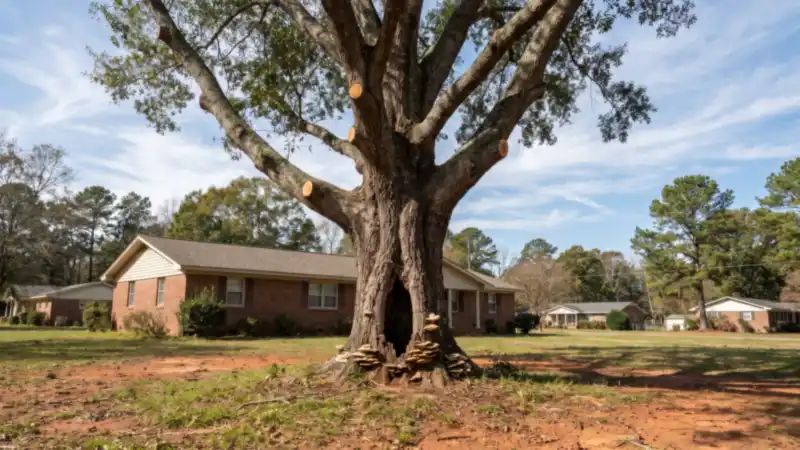
A tree becomes a removal candidate when the problem sits in the structure itself rather than the canopy. Significant trunk decay, a root system that’s failed or is actively failing, a lean that’s new or worsening, or widespread dead wood throughout the tree rather than isolated branches all point toward removal, since trimming can’t fix a structural problem underneath the surface.
Location factors into the decision too, independent of the tree’s health. A moderately risky tree in an open field with nothing nearby carries less urgency than the same tree positioned over a driveway, a play area, or a house. In borderline cases, what the tree is near can tip the decision even when the health assessment alone might go either way.
Age and recovery potential matter as a third factor. A younger tree with a structural issue sometimes has more capacity to respond well to corrective trimming than an older tree with the same problem, simply because it has more years of growth ahead to compensate. That’s part of why tree trimming vs tree removal in Pelzer SC isn’t a decision based on one single symptom, but on how several factors line up together.
Questions That Help Point to the Right Answer
A handful of questions can help clarify which side of the decision your tree falls on before anyone shows up to look at it. Here’s what to think through.
- Is the problem limited to specific branches, or does it affect the trunk and root system as a whole?
- Has the tree’s condition changed recently, like a new lean or sudden dieback, or has it looked this way for a long time without getting worse?
- Would trimming the problem areas leave the tree structurally stable, or would it just remove the visible symptoms while the underlying issue remains?
- What’s near the tree that would be at risk if it failed, and how does that change the urgency of the decision?
- Is the tree a species known for developing structural weaknesses as it matures, which might make monitoring more important going forward either way?
A tree that’s simply overgrown, with no signs of trunk or root trouble, almost always lands on the trimming side once these questions get answered. A tree showing structural red flags, especially near something valuable, tends to land on the removal side even if parts of it still look healthy.
It’s worth revisiting these questions periodically rather than answering them once and moving on. A tree that was clearly a trimming candidate a few years ago can shift toward removal territory as it ages, especially after a storm or a stretch of drought, so a one time assessment doesn’t necessarily hold forever.
Why Franklin Tree Service Doesn’t Default to Either Option
Deciding between trimming and removal requires looking at the tree’s actual structure, not just its appearance from the yard. Franklin Tree Service checks the trunk, the root flare, and the overall canopy condition before recommending one option over the other, rather than assuming the more dramatic looking tree automatically needs to come down.
That distinction protects trees that don’t need to be lost. A mature tree that’s simply overgrown after years of neglect can often be restored to a healthy, manageable shape through trimming alone, preserving decades of growth that removal would erase permanently. At the same time, a tree with real structural failure doesn’t get a trim that only buys a little time before the same problem resurfaces.
That second point matters more than it might seem. A trim that only addresses the visible symptoms of a deeper structural problem can actually create a false sense of security, leading a homeowner to believe the risk has been handled when it hasn’t. An honest removal recommendation, even when it’s the harder decision to hear, avoids that false comfort.
Properties across Pelzer and the surrounding area often have a mix of both situations on the same lot, an overgrown tree that just needs shaping standing next to one that’s genuinely failing. Each tree gets evaluated on its own rather than grouped into a single recommendation for the whole property.
Find Out Which Side of the Decision Your Tree Is On
A tree that looks troubled doesn’t have to stay a guessing game between trimming and removal. The right call depends on what’s actually happening beneath the surface, and that only shows up with a direct look at the tree itself.
The tree trimming team at Franklin Tree Service and the tree removal crew work from the same assessment, so you get an honest answer either way. Call 864-232-8194 and find out which one your tree actually needs.