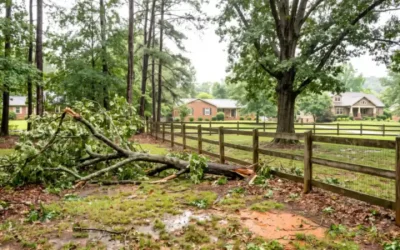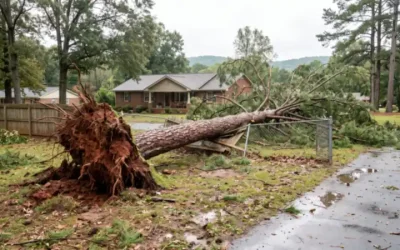
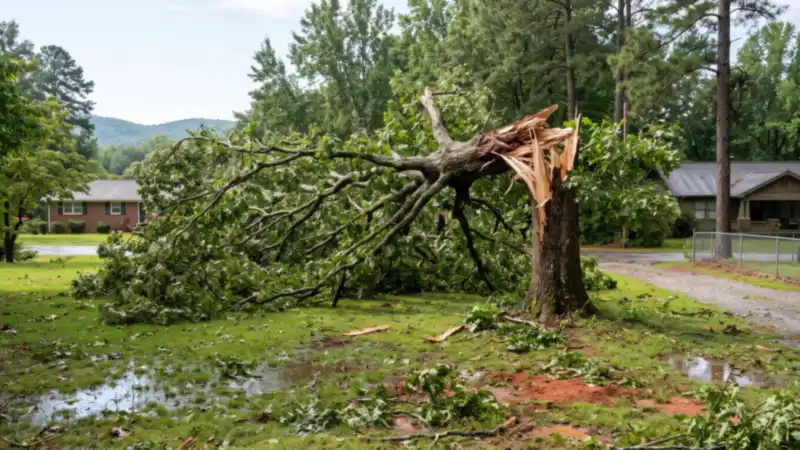
The storm took a huge limb, maybe more than one, and now your tree looks lopsided and stripped bare on one side while the rest of it still has leaves and seems fine. You’re left staring up at it trying to decide if it’s going to bounce back or if what’s left is just waiting to fail too. Storm damaged tree recovery in Pelzer SC isn’t always a lost cause, but it isn’t always a sure thing either, and the difference matters enough to get a real look before you decide. Call 864-232-8194 and find out which situation you’re dealing with.
Storm Damaged Tree Recovery in Pelzer SC: What Actually Determines the Outcome
A tree’s chances of recovering after major canopy loss come down to how much of the tree’s structure survived intact, not just how much canopy is gone. A tree that lost branches but kept its main trunk, central leader, and a reasonable portion of healthy limbs has real potential to recover over a few growing seasons.
The location of the damage matters as much as the amount. Losing branches spread across the canopy is generally less serious than losing one entire side, since a one-sided loss leaves the tree unbalanced and puts uneven stress on the remaining limbs and the trunk itself. That kind of imbalance can also change how the tree handles wind going forward, since weight and wind resistance that used to be spread evenly are now concentrated differently.
How the branches broke matters too. A clean break at a natural branch point heals differently than a jagged tear that ripped bark and wood away from the trunk. Torn wounds expose more of the tree’s interior to moisture and decay, which can invite problems well after the storm itself is long gone.
Age and species play a role as well. A younger, fast growing tree often has more energy to push out new growth and recover its shape over a couple of seasons. An older tree, or one that was already under stress from drought or crowding before the storm hit, has less reserve capacity to draw on, which can tip the outcome even when the visible damage looks similar to a healthier tree’s.
Signs the Tree Is Likely to Recover, and Signs It Isn’t
A few specific observations can help tell the difference between a tree that’s likely to bounce back and one that’s probably not going to make it. None of these require special equipment, just a closer look over the days and weeks after the damage happens.
- New growth appearing at the edges of broken branches within a few weeks is a strong sign the tree is still functioning well
- A trunk that remains straight and solid, without new cracks or splits, suggests the core structure is intact
- Bark that stays firmly attached around the wound, rather than peeling away in sheets, is a good sign for healing
- A canopy that still has healthy green leaves on the undamaged side points to a tree with enough remaining capacity to recover
- Large exposed wounds with torn, ragged edges heal more slowly and are more vulnerable to decay and pests over time
- A trunk with a new lean or visible cracking at the base, on top of the canopy loss, usually signals a tree that’s unlikely to stabilize
A tree showing mostly positive signs can often be helped along with some corrective trimming to clean up torn wood and encourage balanced regrowth. A tree showing several of the negative signs together is usually past the point where recovery is realistic, even if it still has some green leaves left.
Give it more than just the first few days before deciding. Some of these signs, especially new growth at wound edges, take a few weeks to show up clearly, and judging a tree’s prospects too early can lead to removing something that actually had a reasonable shot at recovering.
Why Franklin Tree Service Doesn’t Default to Removal After Storm Damage
Deciding whether a storm damaged tree should be saved or removed takes an actual look at the wound, the trunk, and the overall structure, not an assumption based on how dramatic the damage looks at first glance. Franklin Tree Service checks the break points, the trunk condition, and the balance of what remains before recommending corrective trimming or full removal.
A tree that looks alarming right after a storm, half its canopy gone and branches scattered across the yard, sometimes has a genuinely good recovery outlook once the damage gets a closer look. The opposite is also true. A tree that still has most of its leaves can be structurally compromised in ways that aren’t obvious from the ground, especially if the trunk itself took damage.
Storms move through Pelzer and the surrounding area with enough regularity that storm damaged tree recovery comes up often, and every situation gets evaluated on its own, since two trees that lost the same amount of canopy can have very different outcomes depending on species, age, and how the damage happened.
Get a Straight Answer About Your Storm Damaged Tree
A tree that’s missing half its canopy doesn’t have to stay a guessing game. Whether it needs cleanup trimming to help it recover or has already passed the point where saving it makes sense, finding out now beats watching it decline slowly over the next few seasons.
The storm damage cleanup team at Franklin Tree Service can assess your tree and tell you honestly whether it’s a candidate for recovery, with the tree removal crew ready to step in if it isn’t. Call 864-232-8194 and get a clear answer about what your tree actually needs.