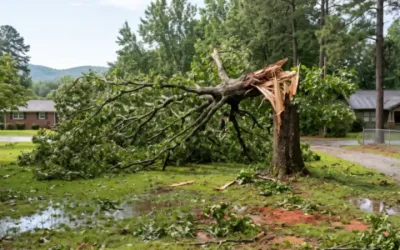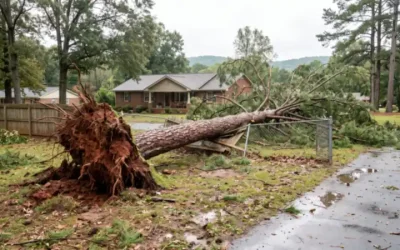
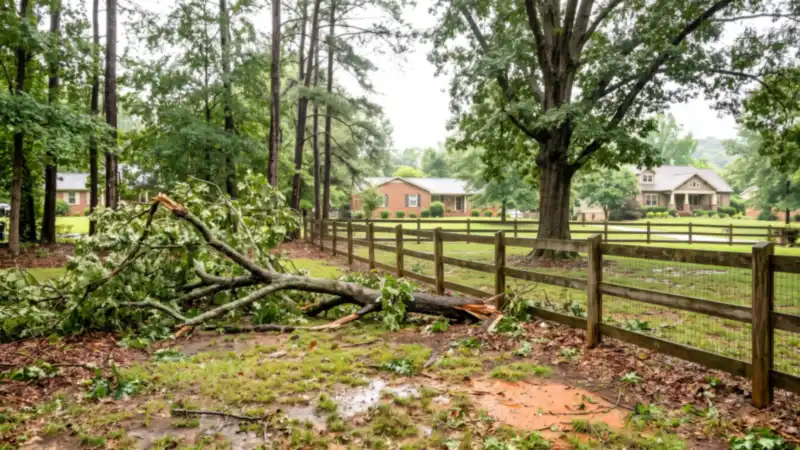
You watched the same storm hit both yards, and the neighbor’s tree lost a major limb while yours came through fine. It wasn’t luck. A tree that’s been maintained well tends to handle wind and rain differently than one that’s been left alone for years, and storm prevention tree trimming Pelzer SC homeowners schedule ahead of storm season is a big part of that difference. Call 864-232-8194 to find out what your trees might need before the next one rolls through.
What Storm Prevention Tree Trimming in Pelzer SC Actually Changes
Trimming reduces storm risk mainly by removing the weak points that are most likely to fail under wind load, not by making a tree somehow immune to damage. Dead and dying branches are the clearest example, since they’ve already lost the flexibility and structural integrity that lets healthy wood bend under stress instead of snapping.
Crossing and rubbing branches are another common target. Two limbs that constantly rub against each other wear down their own bark and wood over time, creating weak points that are more likely to break loose exactly when wind puts the most pressure on them. Removing one of the two before that damage accumulates takes away a failure point before it becomes one.
Canopy density matters too. A tree with an overly thick, crowded canopy catches more wind than one that’s been thinned to let air pass through more easily. That thinning doesn’t make a tree weaker, since the goal is removing excess growth rather than structurally important limbs, and it can meaningfully reduce the total force a storm puts on the tree as a whole.
None of this means a well trimmed tree is guaranteed to come through every storm without damage. Severe enough wind, saturated soil, or a direct hit from debris can still take down a healthy, well maintained tree. What regular trimming does is reduce the number of ways a tree can fail, which lowers the odds of damage without eliminating the risk entirely.
Timing plays a role in how much benefit a trim provides. Trimming well before storm season gives a tree time to respond to the cuts and settle into its new shape, while a trim done right before a forecasted storm is more about removing the most obvious hazards quickly than achieving the full benefit of a thorough structural trim.
What a Storm Prep Trim Usually Focuses On
A trimming visit aimed at reducing storm risk tends to prioritize a specific set of issues rather than a general shape up. Here’s what that kind of trim typically addresses.
- Dead, dying, or clearly weakened branches anywhere in the canopy, since these are the most likely points of failure
- Branches crossing or rubbing against each other, which creates ongoing damage even without a storm involved
- Overly dense canopy sections that catch more wind than necessary, especially on trees that haven’t been thinned in several years
- Limbs extending directly over the roof, a parked car, or a frequently used part of the yard, where failure would do the most damage
- Co-dominant stems, meaning two main trunks growing from roughly the same point, which are naturally weaker at the point they join together
- Any limb showing cracks, splits, or included bark where it attaches to the trunk, since those are structural weak points regardless of the tree’s overall health
Addressing these specific issues ahead of storm season does more to reduce risk than a general trim focused purely on appearance, even though the two can happen in the same visit.
Trees that get this kind of attention on a recurring schedule tend to need less dramatic intervention over time, since each trim builds on the last rather than starting from a tree that’s gone years without any structural correction. That’s a meaningful difference from a one-time trim on a tree that’s never had this kind of assessment before.
Why Franklin Tree Service Trims With Storm Risk in Mind
Reducing storm risk through trimming means identifying the specific weak points in a tree’s structure, not just cutting back whatever looks overgrown. Franklin Tree Service checks for dead wood, crossing branches, and structural weak points like co-dominant stems before deciding what to remove and what to leave.
That approach matters because not every cut reduces risk equally. Removing the wrong branches can leave a tree looking tidy while the actual structural weaknesses remain untouched. Focusing on the issues that genuinely affect how a tree handles wind is what makes storm prevention tree trimming worth doing in the first place, rather than just a seasonal chore.
Pelzer and the surrounding area see enough seasonal storm activity that trimming ahead of the worst months is a practical habit for homeowners with mature trees on the property, not an unnecessary precaution.
Get Your Trees Ready Before the Next Storm
A tree that’s been checked for weak points and trimmed accordingly isn’t guaranteed to come through every storm unscathed, but it’s working with better odds than one that’s never had that attention. Getting ahead of storm season is easier than cleaning up after it.
The tree trimming team at Franklin Tree Service can assess your trees for storm risk now, with the storm damage cleanup crew ready if a storm gets ahead of you anyway. Call 864-232-8194 and get your trees ready before the next one hits.